Mido Ocean Star GMT vs Tag Heuer Aquaracer Professional 300
Two divers compared — $1,000–$1,500 vs $2,500–$5,000
Quick Verdict
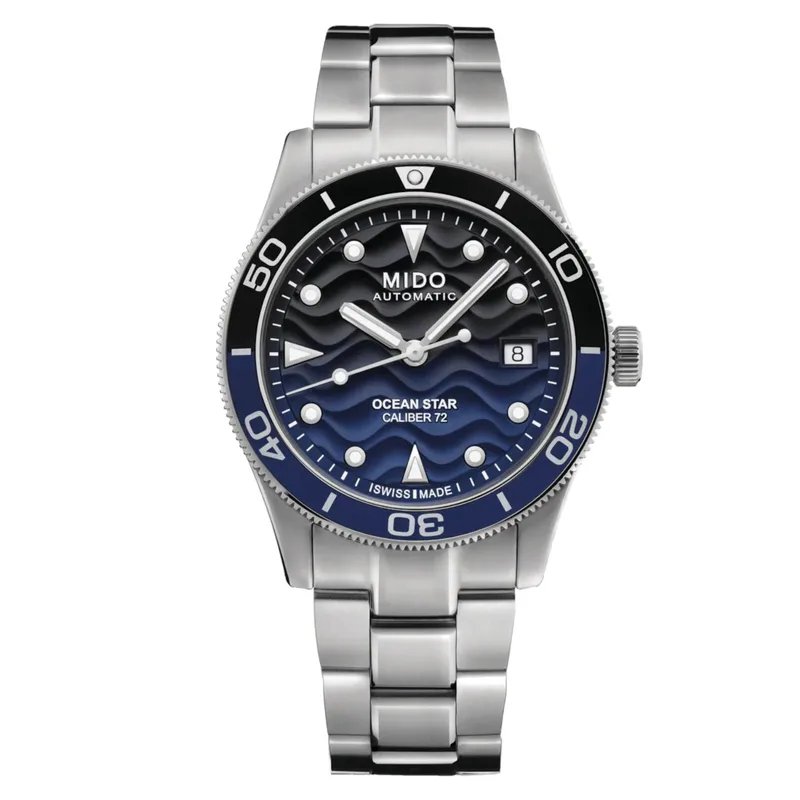
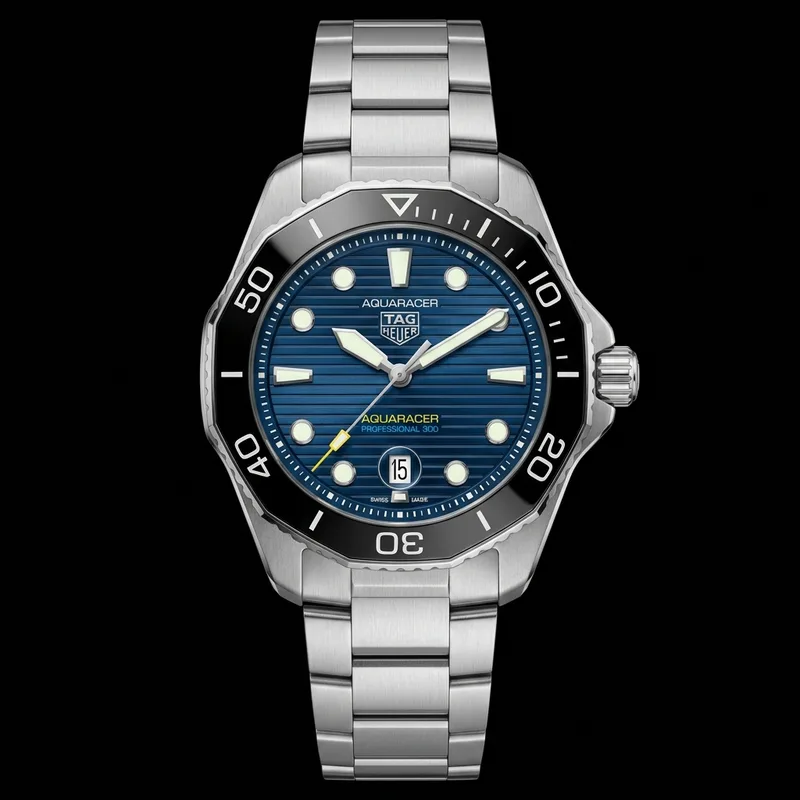
The Mido Ocean Star GMT ($1,000–$1,500) offers Automatic (ETA C07.661 base) precision in the tier below the Tag Heuer Aquaracer Professional 300 ($2,500–$5,000). The Ocean Star GMT measures 44mm and is rated 200m (20 ATM). The Aquaracer Professional 300 counters with Swiss Made craftsmanship and 300m (30 ATM) water resistance. Both are exceptional divers for their respective tiers.
Transparency — We earn a small commission on purchases made through our Amazon links. This doesn't affect our editorial independence.
Specifications Compared
| Feature | Mido Ocean Star GMT | Tag Heuer Aquaracer Professional 300 |
|---|---|---|
| Price | $1,000–$1,500 | $2,500–$5,000 |
| Case Size | 44mm | 43mm |
| Movement | Automatic Caliber 80 (Base ETA C07.661) | Automatic Caliber 5 |
| Caliber Type | Automatic (ETA C07.661 base) | Automatic (ETA 2824-2 / Sellita SW200 base) |
| Power Reserve | 80 Hours | 38 Hours |
| Water Resistance | 200m (20 ATM) | 300m (30 ATM) |
| Crystal | Sapphire with Double-sided AR | Sapphire with Anti-Reflective Coating |
| Case Material | Stainless Steel | Stainless Steel |
| Origin | Swiss Made | Swiss Made |
Category-by-Category Analysis
Design & Aesthetics
Mido's design language vs Tag Heuer's approach
The Mido Ocean Star GMT features a Stainless Steel case at 44mm with Sapphire with Double-sided AR protection. The Tag Heuer Aquaracer Professional 300 offers Stainless Steel construction at 43mm with Sapphire with Anti-Reflective Coating. Both represent their brand's distinct design philosophy and heritage.
Movement & Performance
Automatic Caliber 80 (Base ETA C07.661) vs Automatic Caliber 5
The Ocean Star GMT runs the Automatic Caliber 80 (Base ETA C07.661) (Automatic (ETA C07.661 base), 80 Hours power reserve) at 21,600 vph (3 Hz) frequency. The Aquaracer Professional 300 uses the Automatic Caliber 5 (Automatic (ETA 2824-2 / Sellita SW200 base), 38 Hours reserve) at 28,800 vph (4 Hz). The Ocean Star GMT edges ahead on power reserve.
Wearability & Fit
44mm vs 43mm — different wrist presence
At 44mm, the Ocean Star GMT has a bolder wrist presence compared to the Aquaracer Professional 300 at 43mm. Water resistance differs: 200m (20 ATM) vs 300m (30 ATM).
Value & Cost of Ownership
Mido sits in the lower tier
The Mido Ocean Star GMT sits at $1,000–$1,500 and the Tag Heuer Aquaracer Professional 300 at $2,500–$5,000. On the specs that outlast any price: the Ocean Star GMT uses Sapphire with Double-sided AR with 80 Hours, against Sapphire with Anti-Reflective Coating and 38 Hours on the Aquaracer Professional 300. Service intervals are typically 5-7 years for both.
Water Resistance
200m (20 ATM) vs 300m (30 ATM)
The Ocean Star GMT is rated to 200m (20 ATM) while the Aquaracer Professional 300 handles 300m (30 ATM). The Aquaracer Professional 300 offers superior water resistance.
Materials Face-Off
| Component | Mido Ocean Star GMT | Tag Heuer Aquaracer Professional 300 |
|---|---|---|
| Case alloy | Stainless steel 316L | Stainless steel 316L (medical-grade, with composition Cr 16–18%, Ni 10–14%, Mo 2–3%). Standard mid-range Swiss spec. Not 904L (Rolex Oystersteel) or G |
| Crystal | Synthetic sapphire grown via Verneuil process, Mohs 9. Double-sided AR coating — uncommon at this price tier, provides exceptionally clear dial readi Mohs 9 | Ceramic (zirconia-based ZrO₂) — virtually scratchproof (Mohs ~9), color-stable under UV exposure. The ceramic is sintered, then engraved with dive sc |
| Bezel insert | Ceramic (ZrO₂) — scratchproof, color-stable. Engraved 24-hour scale | Synthetic sapphire (Al₂O₃) grown via the Verneuil process, Mohs 9. Anti-reflective coating on interior surface only. Cyclops magnifier above date wind Mohs 9 |
| Lume specification | Super-LumiNova (variant-dependent grade) | Super-LumiNova on the hands and indices. Grade and glow duration are not published by the manufacturer for this reference, so neither is claimed here. |
| Bracelet alloy | Stainless steel 316L | Stainless steel 316L matching the case. |
Cost of Ownership Compared
The Mido Ocean Star GMT saves you $2,254 over 5 years of ownership
Who Should Pick Which
Pick the Mido Ocean Star GMT if…
- Enthusiasts wanting proven Swiss/Japanese quality in the $1,000–$2,000 sweet spot
- Dive watch enthusiasts — 200m water resistance is proper dive spec
- Weekend warriors — 80-hour power reserve means it survives two days off the wrist
- Those who prioritize scratch resistance — sapphire crystal
- Dive watch collectors who appreciate proper ISO-rated tool watches
Pick the Tag Heuer Aquaracer Professional 300 if…
- Dive watch enthusiasts — 300m water resistance is proper dive spec
- Those who prioritize scratch resistance — sapphire crystal
- Dive watch collectors who appreciate proper ISO-rated tool watches
- Buyers who prefer a commanding wrist presence — 43mm case
Mido Ocean Star GMT
- 44mm wears large — too big for under-7" wrists
- ETA base movement at this price — fair value but not in-house prestige
- Crystal AR coating can show fingerprints — double-sided AR is a quality upgrade but requires more frequent wipe-downs
- Bracelet quality is adequate not exceptional — most owners report the bracelet is the watch's weak point; aftermarket rubber/MN straps significantly upgrade daily wear
Tag Heuer Aquaracer Professional 300
- Sellita SW200-1 base at a $2,500–$5,000 band retail — many enthusiasts feel TAG Heuer charges a brand premium that the movement doesn't justify (Hamilton Khaki Field with similar movement architecture retails ~$700). The Aquaracer's price reflects brand positioning rather than movement engineering.
- 38-hour power reserve — modest by 2026 standards where peers (Tudor MT5402: 70h, Longines L888.5: 72h, ETA C07/H-10: 80h) offer significantly more reserve.
- 21mm lug width — unusual width limits aftermarket strap compatibility.
- Cyclops magnifier — polarising design element; some buyers love it, others find it dated.
Our Verdict
Mido
Ocean Star GMT
Choose the Mido Ocean Star GMT if you prioritize Automatic (ETA C07.661 base) engineering, Swiss Made craftsmanship, and 200m (20 ATM) water resistance. At $1,000–$1,500, it delivers Automatic Caliber 80 (Base ETA C07.661) with 80 Hours power reserve.
Check Price on AmazonTag Heuer
Aquaracer Professional 300
Choose the Tag Heuer Aquaracer Professional 300 if you value Automatic (ETA 2824-2 / Sellita SW200 base) technology, Swiss Made heritage, and 43mm proportions. At $2,500–$5,000, the Automatic Caliber 5 with 38 Hours power reserve makes it a compelling choice.
Check Price on AmazonThe Bottom Line
The Mido Ocean Star GMT and Tag Heuer Aquaracer Professional 300 represent two distinct approaches to the diver category — the Mido bringing Swiss Made tradition while Tag Heuer delivers Swiss Made engineering.
Frequently Asked Questions
More Comparisons
Explore These Watches
How This Page Was Made
Our comparisons are generated from a hand-maintained specification database and reviewed under our editorial standards. We use AI tools to assemble pages from that data. We don’t invent specs: every number traces back to the database, and when we correct an entry, the fix is applied site-wide. As an Amazon Associate, The Horologist earns from qualifying purchases.