Tissot PRX Powermatic 80 vs Rado Captain Cook High-Tech Ceramic
Tissot's timepiece meets Rado's diver
Quick Verdict
The Tissot PRX Powermatic 80 ($500–$1,000) offers In-House Automatic (ETA C07.111 base) precision in the tier below the Rado Captain Cook High-Tech Ceramic ($1,500–$2,500). The PRX Powermatic 80 measures 40mm and is rated 100m (10 ATM). The Captain Cook High-Tech Ceramic counters with Swiss Made craftsmanship and 300m (30 ATM) water resistance. Both are exceptional watches for their respective tiers.
Transparency — We earn a small commission on purchases made through our Amazon links. This doesn't affect our editorial independence.
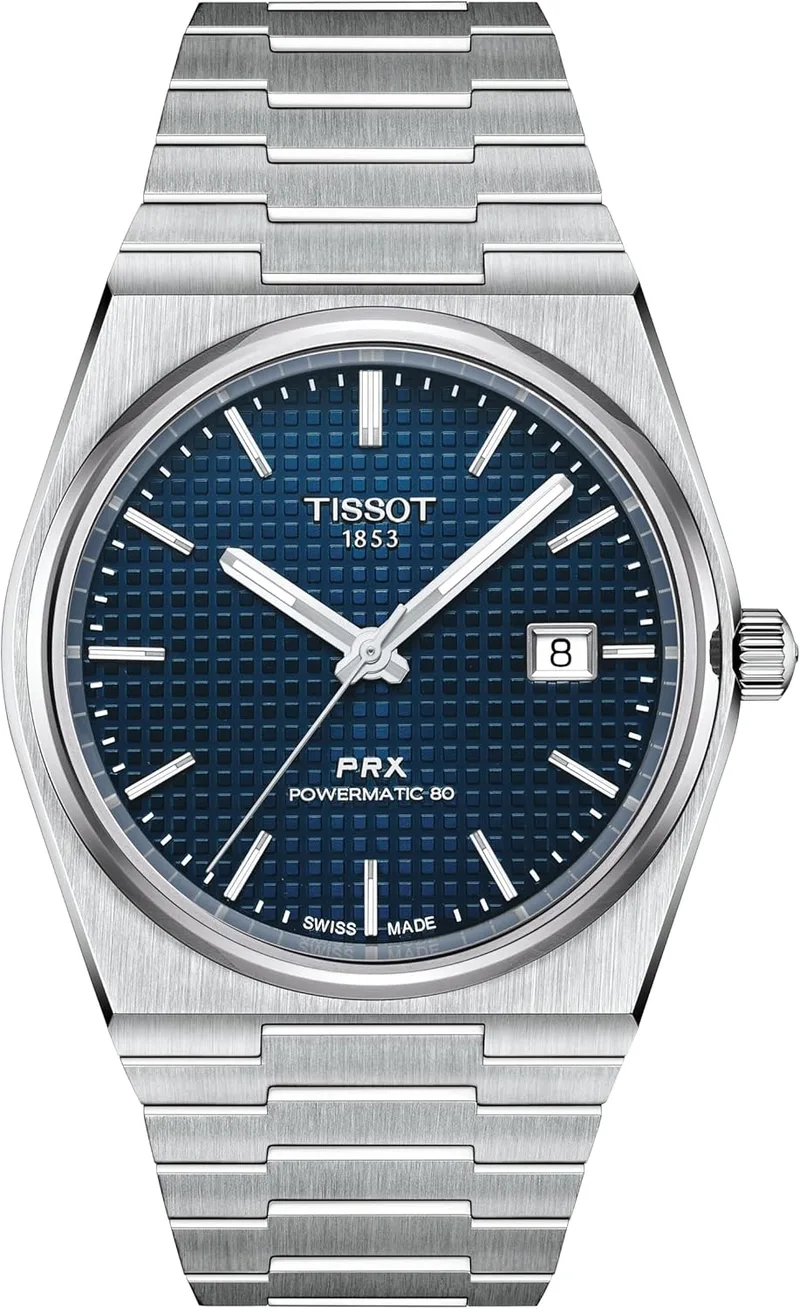
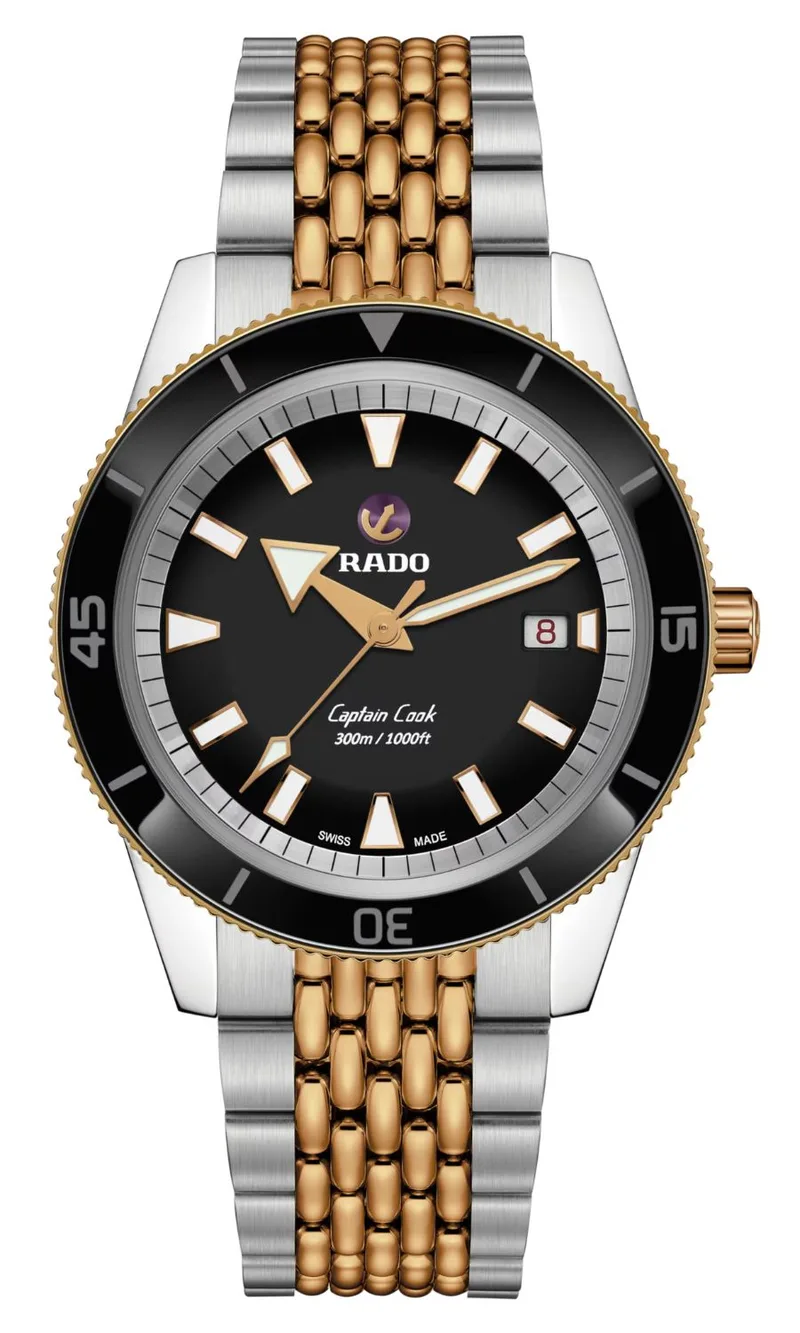
Specifications Compared
| Feature | Tissot PRX Powermatic 80 | Rado Captain Cook High-Tech Ceramic |
|---|---|---|
| Price | $500–$1,000 | $1,500–$2,500 |
| Case Size | 40mm | 43mm |
| Movement | Automatic Powermatic 80.111 | Automatic Calibre R734 |
| Caliber Type | In-House Automatic (ETA C07.111 base) | Automatic (ETA C07.611 base) |
| Power Reserve | 80 Hours | 80 Hours |
| Water Resistance | 100m (10 ATM) | 300m (30 ATM) |
| Crystal | Scratch-resistant Sapphire | Box-shaped Sapphire |
| Case Material | 316L Stainless Steel | High-Tech Ceramic |
| Origin | Swiss Made | Swiss Made |
Category-by-Category Analysis
Design & Aesthetics
Tissot's design language vs Rado's approach
The Tissot PRX Powermatic 80 features a 316L Stainless Steel case at 40mm with Scratch-resistant Sapphire protection. The Rado Captain Cook High-Tech Ceramic offers High-Tech Ceramic construction at 43mm with Box-shaped Sapphire. Both represent their brand's distinct design philosophy and heritage.
Movement & Performance
Automatic Powermatic 80.111 vs Automatic Calibre R734
The PRX Powermatic 80 runs the Automatic Powermatic 80.111 (In-House Automatic (ETA C07.111 base), 80 Hours power reserve) at 21,600 vph (3 Hz) frequency. The Captain Cook High-Tech Ceramic uses the Automatic Calibre R734 (Automatic (ETA C07.611 base), 80 Hours reserve) at 21,600 vph (3 Hz). Power reserves are closely matched.
Wearability & Fit
40mm vs 43mm — different wrist presence
At 40mm, the PRX Powermatic 80 wears more compactly on smaller wrists compared to the Captain Cook High-Tech Ceramic at 43mm. Water resistance differs: 100m (10 ATM) vs 300m (30 ATM).
Value & Cost of Ownership
Tissot sits in the lower tier
The Tissot PRX Powermatic 80 sits at $500–$1,000 and the Rado Captain Cook High-Tech Ceramic at $1,500–$2,500. On the specs that outlast any price: the PRX Powermatic 80 uses Scratch-resistant Sapphire with 80 Hours, against Box-shaped Sapphire and 80 Hours on the Captain Cook High-Tech Ceramic. Service intervals are typically 5-7 years for both.
Water Resistance
100m (10 ATM) vs 300m (30 ATM)
The PRX Powermatic 80 is rated to 100m (10 ATM) while the Captain Cook High-Tech Ceramic handles 300m (30 ATM). The Captain Cook High-Tech Ceramic offers superior water resistance.
Materials Face-Off
| Component | Tissot PRX Powermatic 80 | Rado Captain Cook High-Tech Ceramic |
|---|---|---|
| Case alloy | Stainless steel 316L (medical-grade, with composition Cr 16–18%, Ni 10–14%, Mo 2–3%) — the standard mid-range Swiss spec; not 904L (Rolex Oystersteel | High-Tech Ceramic (Zirconium oxide / ZrO₂ based). Sintered at ~1,450°C. Mohs hardness ~8.5–9. Virtually scratchproof — only diamond and sapphire can |
| Sapphire crystal | Synthetic corundum (Al₂O₃) grown via the Verneuil process, Mohs hardness 9. Anti-reflective coating on the interior surface only (single-side AR is st Mohs 9 | While ceramic is extremely scratch-resistant, it is brittle — sharp impacts, drops on hard surfaces, or concentrated point loads can cause cracking o |
| Lume specification | Super-LumiNova on the hands and markers. Grade and glow duration are not published by the manufacturer for this reference, so neither is claimed here. | Box-shaped sapphire (Mohs 9) with anti-reflective coating — vintage-inspired domed profile. Mohs 9 |
| Bracelet alloy | Stainless steel 316L matching the case. | Ceramic — matches the case material for visual and tactile consistency. |
| Bracelet | — | Ceramic links (matching case) — articulated three-link design. Significantly lighter than steel bracelets. |
Cost of Ownership Compared
The Tissot PRX Powermatic 80 saves you $1,629 over 5 years of ownership
Who Should Pick Which
Pick the Tissot PRX Powermatic 80 if…
- Strong value proposition under $1,000 with automatic Swiss movement
- Active lifestyle wearers — 100m water resistance handles swimming and water sports
- Weekend warriors — 80-hour power reserve means it survives two days off the wrist
- Those who prioritize scratch resistance — sapphire crystal
- Integrated-bracelet aesthetic fans wanting the Royal Oak look for 1/20th the price
Pick the Rado Captain Cook High-Tech Ceramic if…
- Dive watch enthusiasts — 300m water resistance is proper dive spec
- Weekend warriors — 80-hour power reserve means it survives two days off the wrist
- Those who prioritize scratch resistance — sapphire crystal
- Dive watch collectors who appreciate proper ISO-rated tool watches
- Heritage enthusiasts drawn to ** Rado's historical pedigree
Tissot PRX Powermatic 80
- Retail markup is generous. The PRX commonly transacts at 30–40% under retail on Jomashop, Tissot's own e-commerce promotions, and authorized online dealers. Paying full $725 retail is rarely the right move — it usually means immediate ~30% loss the moment you walk out the door.
- Proprietary endlink limits strap options. The integrated bracelet design means you cannot easily put a NATO, leather two-piece, or rubber strap on the PRX without specialist hardware. This bothers some buyers more than they expect.
- Bracelet sizing is fiddly. Links are joined by screws (good — adjustable at home with a tool), but the screws are tiny and stripping them is common for inexperienced owners. Take it to a watchmaker for sizing if you're unsure.
- 3 Hz "slow" seconds. The reduced frequency (21,600 vph vs. 28,800 vph in some peer movements) means the seconds hand visibly sweeps at 6 ticks/second rather than 8. Some buyers expecting the smoother high-beat sweep find this a minor disappointment.
Rado Captain Cook High-Tech Ceramic
- Ceramic is brittle — drops/sharp impacts can crack the case. Full case replacement, not repair.
- 15.4mm thickness — chunky; won't slide under dress cuffs.
- Skeleton dial is polarizing — many prefer a traditional solid dial.
- ETA C07 base movement at this price — you're paying for the ceramic, not the movement.
Our Verdict
Tissot
PRX Powermatic 80
Choose the Tissot PRX Powermatic 80 if you prioritize In-House Automatic (ETA C07.111 base) engineering, Swiss Made craftsmanship, and 100m (10 ATM) water resistance. At $500–$1,000, it delivers Automatic Powermatic 80.111 with 80 Hours power reserve.
Check Price on AmazonRado
Captain Cook High-Tech Ceramic
Choose the Rado Captain Cook High-Tech Ceramic if you value Automatic (ETA C07.611 base) technology, Swiss Made heritage, and 43mm proportions. At $1,500–$2,500, the Automatic Calibre R734 with 80 Hours power reserve makes it a compelling choice.
Check Price on AmazonThe Bottom Line
The Tissot PRX Powermatic 80 and Rado Captain Cook High-Tech Ceramic represent two distinct approaches to fine watchmaking — the Tissot bringing Swiss Made tradition while Rado delivers Swiss Made engineering.
Frequently Asked Questions
More Comparisons
Tissot PRX vs Hamilton Khaki Field
Integrated bracelet sophistication meets military heritage
Tag Heuer Carrera Chronograph vs Tissot PRX Powermatic 80
Tag Heuer's chronograph meets Tissot's timepiece
Tag Heuer Carrera Chronograph vs Rado Captain Cook High-Tech Ceramic
Tag Heuer's chronograph meets Rado's diver
Explore These Watches
How This Page Was Made
Our comparisons are generated from a hand-maintained specification database and reviewed under our editorial standards. We use AI tools to assemble pages from that data. We don’t invent specs: every number traces back to the database, and when we correct an entry, the fix is applied site-wide. As an Amazon Associate, The Horologist earns from qualifying purchases.