Citizen Tsuyosa Automatic vs Omega Speedmaster Professional
Citizen's timepiece meets Omega's chronograph
Quick Verdict
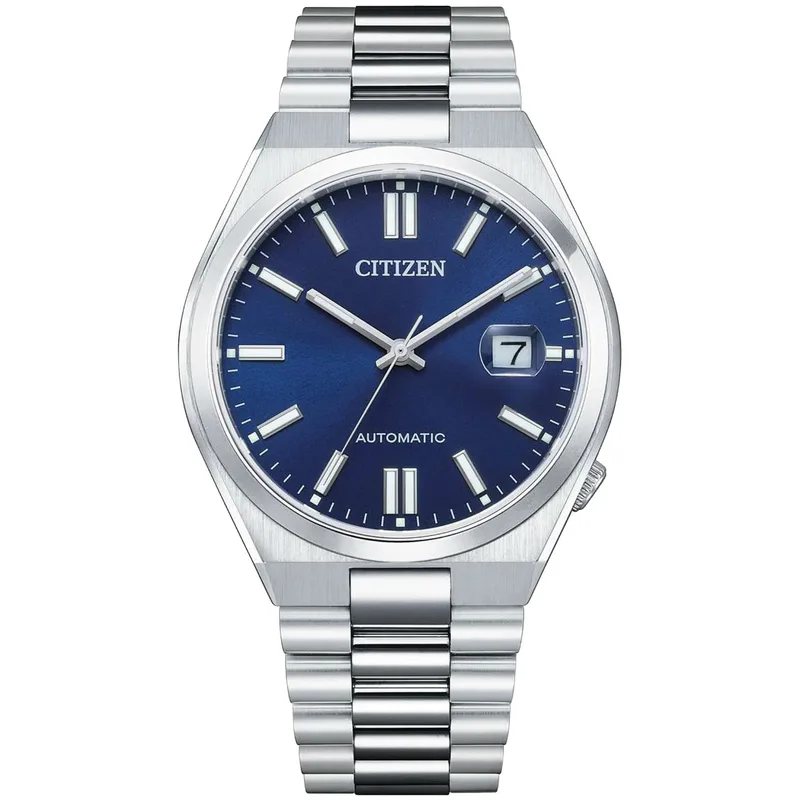
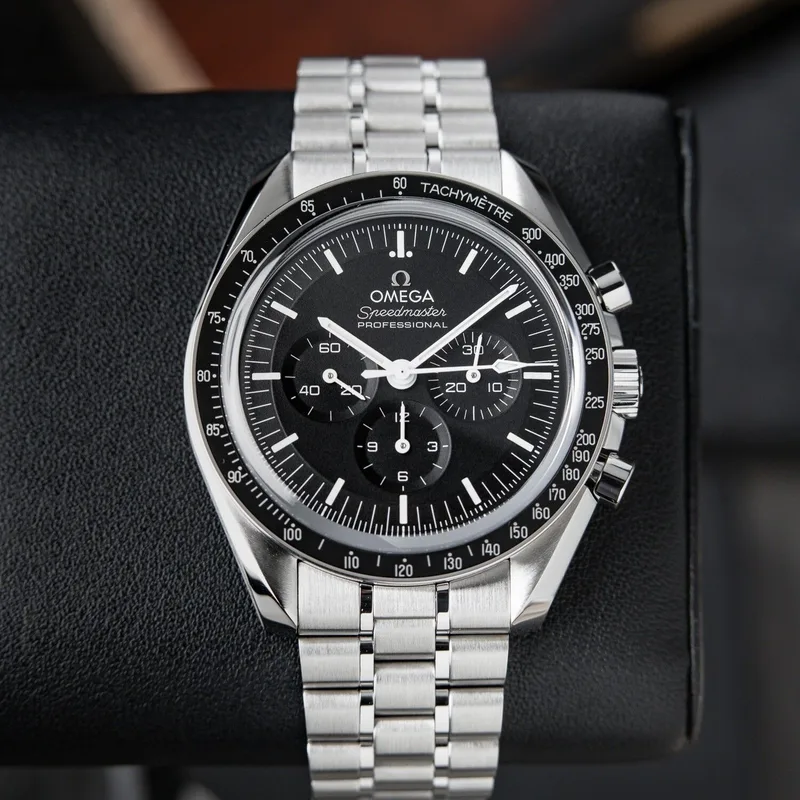
The Citizen Tsuyosa Automatic ($250–$500) offers Citizen/Miyota In-House Automatic precision in the tier below the Omega Speedmaster Professional ($5,000–$10,000). The Tsuyosa Automatic measures 40mm and is rated 50m (5 ATM). The Speedmaster Professional counters with Swiss Made craftsmanship and 50m (5 ATM) water resistance. Both are exceptional watches for their respective tiers.
Transparency — We earn a small commission on purchases made through our Amazon links. This doesn't affect our editorial independence.
Specifications Compared
| Feature | Citizen Tsuyosa Automatic | Omega Speedmaster Professional |
|---|---|---|
| Price | $250–$500 | $5,000–$10,000 |
| Case Size | 40mm | 42mm |
| Movement | Automatic Caliber 8210 | Manual-Winding Caliber 3861 |
| Caliber Type | Citizen/Miyota In-House Automatic | In-House Manual-Winding Manufacture (Co-Axial) |
| Power Reserve | 40 Hours | 50 Hours |
| Water Resistance | 50m (5 ATM) | 50m (5 ATM) |
| Crystal | Sapphire Crystal with Cyclops | Hesalite or Sapphire |
| Case Material | Stainless Steel | Stainless Steel |
| Origin | Made in Japan | Swiss Made |
Category-by-Category Analysis
Design & Aesthetics
Citizen's design language vs Omega's approach
The Citizen Tsuyosa Automatic features a Stainless Steel case at 40mm with Sapphire Crystal with Cyclops protection. The Omega Speedmaster Professional offers Stainless Steel construction at 42mm with Hesalite or Sapphire. Both represent their brand's distinct design philosophy and heritage.
Movement & Performance
Automatic Caliber 8210 vs Manual-Winding Caliber 3861
The Tsuyosa Automatic runs the Automatic Caliber 8210 (Citizen/Miyota In-House Automatic, 40 Hours power reserve) at 21,600 vph (3 Hz) frequency. The Speedmaster Professional uses the Manual-Winding Caliber 3861 (In-House Manual-Winding Manufacture (Co-Axial), 50 Hours reserve) at 21,600 vph (3 Hz). The Speedmaster Professional offers a longer power reserve.
Wearability & Fit
40mm vs 42mm — different wrist presence
At 40mm, the Tsuyosa Automatic wears more compactly on smaller wrists compared to the Speedmaster Professional at 42mm. Water resistance differs: 50m (5 ATM) vs 50m (5 ATM).
Value & Cost of Ownership
Citizen sits in the lower tier
The Citizen Tsuyosa Automatic sits at $250–$500 and the Omega Speedmaster Professional at $5,000–$10,000. On the specs that outlast any price: the Tsuyosa Automatic uses Sapphire Crystal with Cyclops with 40 Hours, against Hesalite or Sapphire and 50 Hours on the Speedmaster Professional. Service intervals are typically 5-7 years for both.
Water Resistance
50m (5 ATM) vs 50m (5 ATM)
The Tsuyosa Automatic is rated to 50m (5 ATM) while the Speedmaster Professional handles 50m (5 ATM). Both offer identical water resistance ratings.
Materials Face-Off
| Component | Citizen Tsuyosa Automatic | Omega Speedmaster Professional |
|---|---|---|
| Case alloy | Stainless steel 316L. | Manual-wind chronograph with Co-Axial escapement (George Daniels design, licensed 1999). Si14 silicon balance spring, free-sprung balance, 234 components, 26 jewels |
| Sapphire crystal | Verneuil-grown synthetic corundum, Mohs 9. Anti-reflective coating, single side. Mohs 9 | Hardened acrylic (Mohs ~2–3) with embossed central Omega logo — the NASA flight-qualified specification Mohs 2.5 |
| Lume specification | Super-LumiNova on the hands and markers. The application is light - this is not a watch to rely on for low-light legibility. Grade and glow duration are not published by the manufacturer for this reference, so neither is claimed here. | Omega's proprietary Si14 silicon hairspring — in series production since 2008 |
| Bracelet alloy | Stainless steel 316L matching the case. | Fixed black anodized aluminum with white tachymeter scale. Preserves the "DOT OVER NINETY" detail from the Apollo 11–era watches |
| Stainless Steel Case | — | 42mm asymmetric case with integrated crown guards (added in 1964 for the 105.012 — the reference Buzz Aldrin wore on the Moon) |
Cost of Ownership Compared
The Citizen Tsuyosa Automatic saves you $7,214 over 5 years of ownership
Who Should Pick Which
Pick the Citizen Tsuyosa Automatic if…
- Budget-conscious buyers wanting serious quality under $500
- Those who prioritize scratch resistance — sapphire crystal
Pick the Omega Speedmaster Professional if…
- History and heritage enthusiasts — the only watch worn on the Moon, with NASA documentation to prove it
- METAS Master Chronometer accuracy at sub-$8,000 — antimagnetic to 15,000 gauss, 0/+5 sec/day
- Chronograph lovers — the manual-wind ritual and hand-wound feel is deeply satisfying
- Value seekers at grey market $5,200–$5,500 — one of the cheapest 5-figure-quality chronographs from a top-tier maison
- Available off-the-shelf — walk into any Omega boutique and buy one today (no Rolex-style waitlist)
Citizen Tsuyosa Automatic
- No hacking seconds. When you pull the crown to set the time, the seconds hand continues running. Setting precisely to-the-second is impossible. The single most-cited Tsuyosa complaint.
- Unidirectional rotor. Only winds in one direction; reserves take longer to build than bidirectional movements.
- Modest accuracy spec. ±10 to +25 sec/day in practice is the realistic band; significantly worse than the Tissot Powermatic 80.
- Proprietary endlinks. Limited strap-swap options.
Omega Speedmaster Professional
- Hesalite scratches — acrylic at Mohs ~2–3 is dramatically softer than sapphire. Polishes out with PolyWatch in 5 minutes, but it's high-maintenance for desk-diving wear
- No screw-down crown, 50m water resistance — this is a NASA chronograph, not a dive watch. Shower-safe, swim-cautious, never deep water
- Manual wind — not for the set-and-forget buyer. Daily winding is part of the ritual; some find it charming, some find it inconvenient
- Wears thick at 13.18mm with a proud bezel — reads as 43–44mm visually because of the broad lug profile
Our Verdict
Citizen
Tsuyosa Automatic
Choose the Citizen Tsuyosa Automatic if you prioritize Citizen/Miyota In-House Automatic engineering, Made in Japan craftsmanship, and 50m (5 ATM) water resistance. At $250–$500, it delivers Automatic Caliber 8210 with 40 Hours power reserve.
Check Price on AmazonOmega
Speedmaster Professional
Choose the Omega Speedmaster Professional if you value In-House Manual-Winding Manufacture (Co-Axial) technology, Swiss Made heritage, and 42mm proportions. At $5,000–$10,000, the Manual-Winding Caliber 3861 with 50 Hours power reserve makes it a compelling choice.
Check Price on AmazonThe Bottom Line
The Citizen Tsuyosa Automatic and Omega Speedmaster Professional represent two distinct approaches to fine watchmaking — the Citizen bringing Made in Japan tradition while Omega delivers Swiss Made engineering.
Frequently Asked Questions
More Comparisons
Explore These Watches
How This Page Was Made
Our comparisons are generated from a hand-maintained specification database and reviewed under our editorial standards. We use AI tools to assemble pages from that data. We don’t invent specs: every number traces back to the database, and when we correct an entry, the fix is applied site-wide. As an Amazon Associate, The Horologist earns from qualifying purchases.