Hamilton Intra-Matic Auto Chronograph vs Seiko Prospex Samurai SRPL13
Hamilton's chronograph meets Seiko's diver
Quick Verdict
The Seiko Prospex Samurai SRPL13 ($500–$1,000) delivers Seiko In-House Automatic technology in the tier below the Hamilton Intra-Matic Auto Chronograph ($2,500–$5,000). The Prospex Samurai SRPL13 measures 41.7mm and is rated 200m (20 ATM). The Intra-Matic Auto Chronograph justifies its premium with Swiss Made heritage and Automatic H-31. Both represent excellent choices in the luxury watch category.
Transparency — We earn a small commission on purchases made through our Amazon links. This doesn't affect our editorial independence.
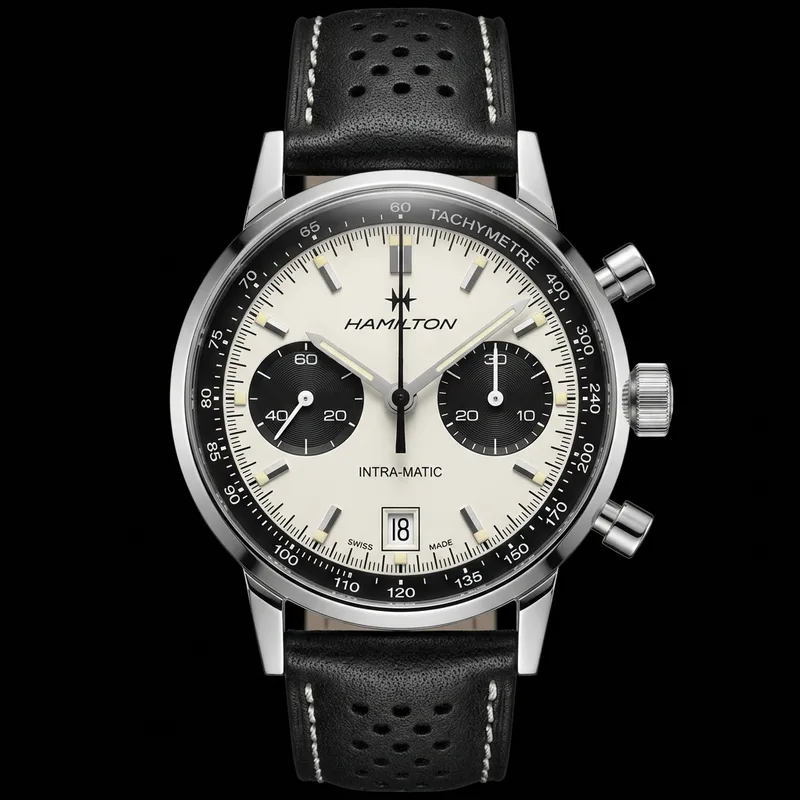
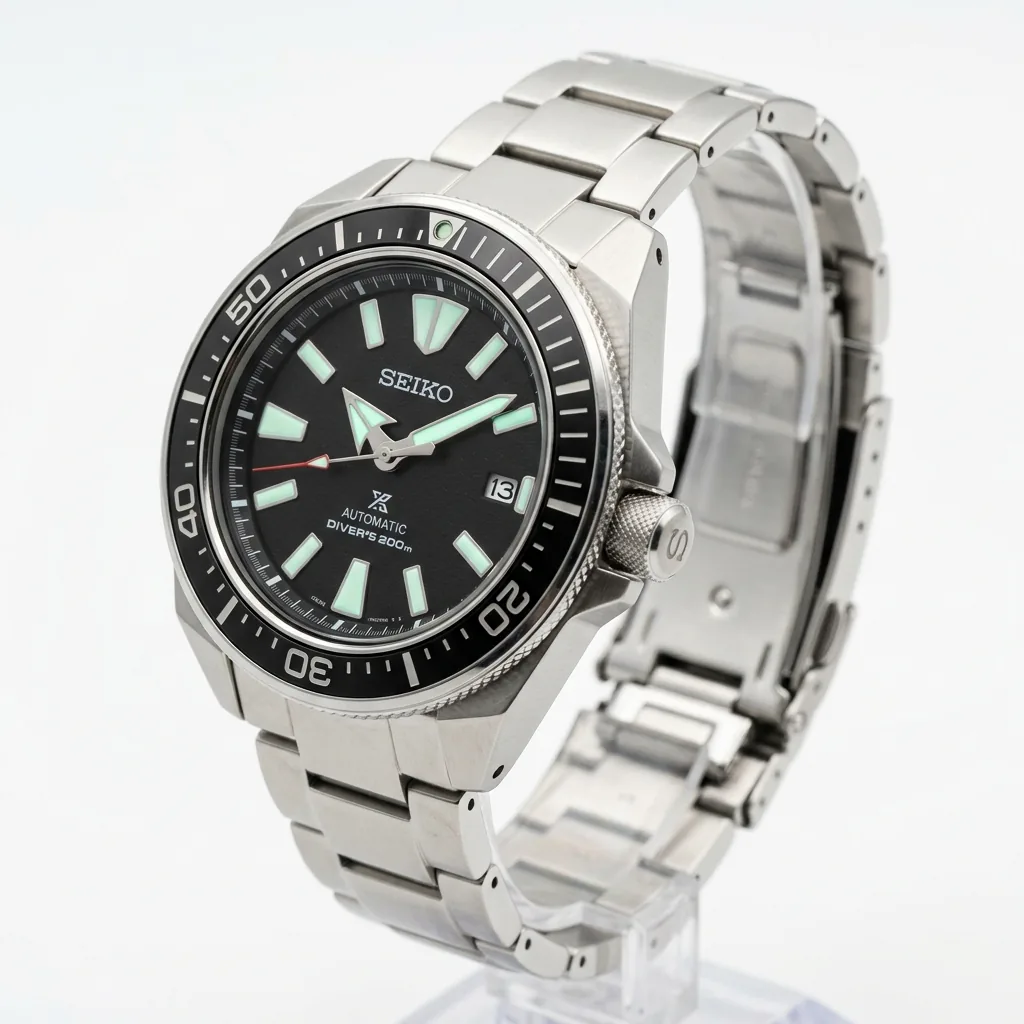
Specifications Compared
| Feature | Hamilton Intra-Matic Auto Chronograph | Seiko Prospex Samurai SRPL13 |
|---|---|---|
| Price | $2,500–$5,000 | $500–$1,000 |
| Case Size | 40mm | 41.7mm |
| Movement | Automatic H-31 | Automatic Caliber 4R35 |
| Caliber Type | Valjoux-Based Automatic Chronograph | Seiko In-House Automatic |
| Power Reserve | 60 Hours | 41 Hours |
| Water Resistance | 100m (10 ATM) | 200m (20 ATM) |
| Crystal | Sapphire (Domed) | Hardlex Crystal |
| Case Material | Stainless Steel | Stainless Steel |
| Origin | Swiss Made | Made in Japan |
Category-by-Category Analysis
Design & Aesthetics
Hamilton's design language vs Seiko's approach
The Hamilton Intra-Matic Auto Chronograph features a Stainless Steel case at 40mm with Sapphire (Domed) protection. The Seiko Prospex Samurai SRPL13 offers Stainless Steel construction at 41.7mm with Hardlex Crystal. Both represent their brand's distinct design philosophy and heritage.
Movement & Performance
Automatic H-31 vs Automatic Caliber 4R35
The Intra-Matic Auto Chronograph runs the Automatic H-31 (Valjoux-Based Automatic Chronograph, 60 Hours power reserve) at 28,800 vph (4 Hz) frequency. The Prospex Samurai SRPL13 uses the Automatic Caliber 4R35 (Seiko In-House Automatic, 41 Hours reserve) at 21,600 vph (3 Hz). The Intra-Matic Auto Chronograph edges ahead on power reserve.
Wearability & Fit
40mm vs 41.7mm — different wrist presence
At 40mm, the Intra-Matic Auto Chronograph wears more compactly on smaller wrists compared to the Prospex Samurai SRPL13 at 41.7mm. Water resistance differs: 100m (10 ATM) vs 200m (20 ATM).
Value & Cost of Ownership
Seiko sits in the lower tier
The Hamilton Intra-Matic Auto Chronograph sits at $2,500–$5,000 and the Seiko Prospex Samurai SRPL13 at $500–$1,000. On the specs that outlast any price: the Intra-Matic Auto Chronograph uses Sapphire (Domed) with 60 Hours, against Hardlex Crystal and 41 Hours on the Prospex Samurai SRPL13. Service intervals are typically 5-7 years for both.
Water Resistance
100m (10 ATM) vs 200m (20 ATM)
The Intra-Matic Auto Chronograph is rated to 100m (10 ATM) while the Prospex Samurai SRPL13 handles 200m (20 ATM). The Prospex Samurai SRPL13 offers superior water resistance.
Our Verdict
Hamilton
Intra-Matic Auto Chronograph
Choose the Hamilton Intra-Matic Auto Chronograph if you prioritize Valjoux-Based Automatic Chronograph engineering, Swiss Made craftsmanship, and 100m (10 ATM) water resistance. At $2,500–$5,000, it delivers Automatic H-31 with 60 Hours power reserve.
Check Price on AmazonSeiko
Prospex Samurai SRPL13
Choose the Seiko Prospex Samurai SRPL13 if you value Seiko In-House Automatic technology, Made in Japan heritage, and 41.7mm proportions. At $500–$1,000, the Automatic Caliber 4R35 with 41 Hours power reserve makes it a compelling choice.
Check Price on AmazonThe Bottom Line
The Hamilton Intra-Matic Auto Chronograph and Seiko Prospex Samurai SRPL13 represent two distinct approaches to fine watchmaking — the Hamilton bringing Swiss Made tradition while Seiko delivers Made in Japan engineering.
Frequently Asked Questions
More Comparisons
Bulova Lunar Pilot vs Hamilton Intra-Matic Chrono
Moon-worn quartz precision meets Swiss automatic heritage
Tag Heuer Carrera Chronograph vs Hamilton Intra-Matic Auto Chronograph
Two chronographs compared — $2,500–$5,000 vs $2,500–$5,000
Tag Heuer Carrera Chronograph vs Seiko Prospex Samurai SRPL13
Tag Heuer's chronograph meets Seiko's diver
Explore These Watches
How This Page Was Made
Our comparisons are generated from a hand-maintained specification database and reviewed under our editorial standards. We use AI tools to assemble pages from that data. We don’t invent specs: every number traces back to the database, and when we correct an entry, the fix is applied site-wide. As an Amazon Associate, The Horologist earns from qualifying purchases.