Updated
Bulova Lunar Pilot vs Hamilton Intra-Matic Chrono
Moon-worn quartz precision meets Swiss automatic heritage
Quick Verdict
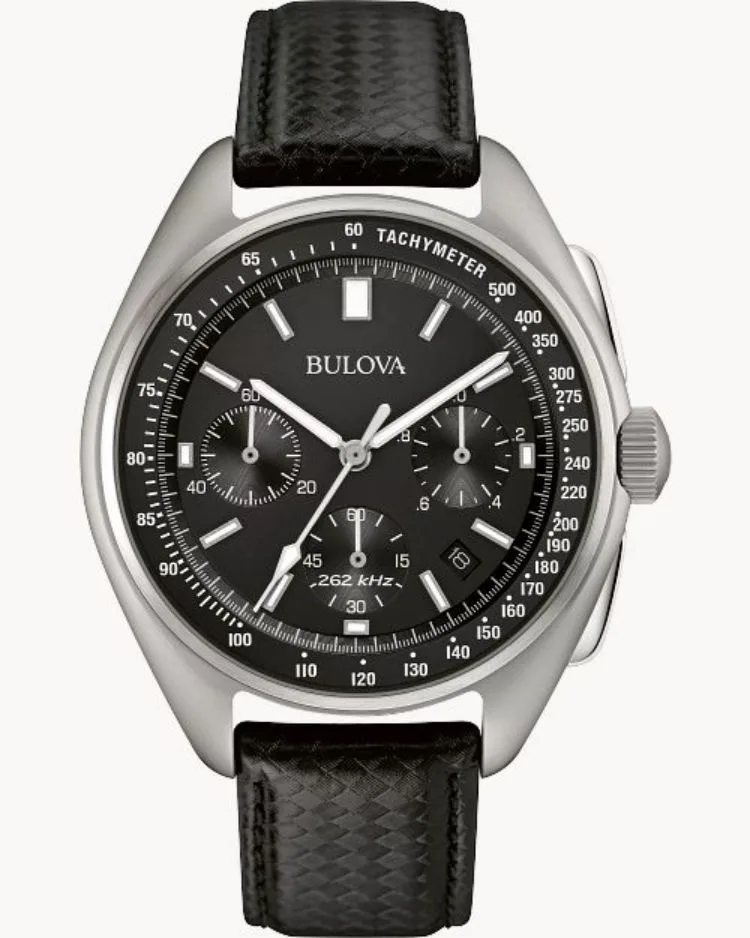
The Bulova Lunar Pilot ($500–$1,000) is the most historically significant chronograph under $1,000 — Dave Scott's backup on Apollo 15 — with a 262kHz high-performance quartz movement. The Hamilton Intra-Matic ($2,500–$5,000) is a gorgeous 1968 automatic reissue with Swiss mechanical charm.
Transparency — We earn a small commission on purchases made through our Amazon links. This doesn't affect our editorial independence.

Specifications Compared
| Feature | Bulova Lunar Pilot Chronograph | Hamilton Intra-Matic Auto Chronograph |
|---|---|---|
| Price | $500–$1,000 | $2,500–$5,000 |
| Case Size | 45mm | 40mm |
| Movement | High-Performance 262kHz Quartz | Automatic H-31 |
| Caliber Type | High-Performance Quartz | Valjoux-Based Automatic Chronograph |
| Power Reserve | N/A (Quartz) | 60 Hours |
| Water Resistance | 50m (5 ATM) | 100m (10 ATM) |
| Crystal | Sapphire Crystal | Sapphire (Domed) |
| Case Material | Stainless Steel | Stainless Steel |
| Origin | Made in Japan (Citizen Group) | Swiss Made |
Category-by-Category Analysis
Design & Aesthetics
NASA tool watch vs 1960s Swiss elegance
The Lunar Pilot is a big, bold tool chronograph (45mm) with a military-spec look. The Intra-Matic is a sleek retro panda-dial chronograph (40mm) with 1960s style. The Bulova is a conversation piece; the Hamilton is a style piece.
Movement & Performance
Different technologies — both excellent at what they do
The Lunar Pilot uses a 262kHz high-performance quartz (±10 sec/year accuracy, 1/10th second chronograph). The Intra-Matic uses the H-31 automatic (60hr reserve, 1/2 second chronograph). The Bulova is far more accurate; the Hamilton has the soul of a mechanical movement.
Wearability & Fit
Hamilton is much more wearable at 40mm
The Lunar Pilot at 45mm × 13.5mm is a large watch that demands 7+ inch wrists. The Intra-Matic at 40mm × 14.7mm wears smaller despite being slightly thicker. For wrists under 7 inches, the Hamilton is the clear choice.
Value & Cost of Ownership
Lunar Pilot is well over a thousand dollars cheaper — and cheaper to maintain
At $500–$1,000 versus $2,500–$5,000, the Lunar Pilot saves thousands. Its quartz movement costs almost nothing to maintain (battery every 2-3 years). The Intra-Matic requires mechanical service every 5-7 years (~$350-500). Over 5 years, the total cost gap is enormous.
Brand Heritage
Space heritage vs cinematic heritage
Bulova's Lunar Pilot went to the Moon on Dave Scott's wrist during Apollo 15 (1971). Hamilton has appeared in 500+ Hollywood films and supplied military watches in both World Wars. Different flavors of heritage, both authentic.
Materials Face-Off
| Component | Bulova Lunar Pilot Chronograph | Hamilton Intra-Matic Auto Chronograph |
|---|---|---|
| Movement | Bulova High Performance Quartz, 262 kHz (262,144 Hz) | Hamilton H-31 caliber |
| Crystal | Sapphire with anti-reflective coating | Domed sapphire ("box crystal" silhouette) |
| Case | Stainless steel 316L (brushed and polished) | Stainless steel 316L |
| Bezel | Fixed tachymeter | — |
Cost of Ownership Compared
The Bulova Lunar Pilot Chronograph saves you $1,500–$2,500 over 5 years of ownership
Who Should Pick Which
Pick the Bulova Lunar Pilot Chronograph if…
- Strong value proposition under $1,000 with quality construction
- Those who prioritize scratch resistance — sapphire crystal
- Chronograph enthusiasts looking for a proven timing instrument
- Heritage enthusiasts drawn to ** Bulova's historical pedigree
- Buyers who prefer a commanding wrist presence — 45mm case
Pick the Hamilton Intra-Matic Auto Chronograph if…
- Active lifestyle wearers — 100m water resistance handles swimming and water sports
- Practical daily wearers — 60-hour reserve gives breathing room
- Those who prioritize scratch resistance — sapphire crystal
- Chronograph enthusiasts looking for a proven timing instrument
- Heritage enthusiasts drawn to ** Hamilton's historical pedigree
Bulova Lunar Pilot Chronograph
- 45mm is large.
- Quartz won't satisfy mechanical purists.
- Bulova brand prestige is below Omega; some buyers feel the brand undersells the Apollo provenance.
Hamilton Intra-Matic Auto Chronograph
- 14.6mm thickness honest but tall.
- Not column-wheel — cam-switching 7753 architecture.
- H-31 isn't in-house in the strict sense.
- Lume is modest.
Our Verdict
Bulova
Lunar Pilot Chronograph
Choose the Lunar Pilot if you want a historically significant chronograph that's accurate, affordable, and conversation-starting. The Apollo 15 connection is genuine, and the 262kHz quartz is the most accurate movement in either watch.
View the dossierHamilton
Intra-Matic Auto Chronograph
Choose the Hamilton Intra-Matic if you want a mechanical chronograph with Swiss heritage and a gorgeous 1960s design. The H-31 automatic movement, panda dial, and retro case design make it a strap monster that looks incredible on any wrist.
Check Price on AmazonThe Bottom Line
The Bulova Lunar Pilot is the only chronograph other than the Omega Speedmaster with verified lunar surface credentials — astronaut Dave Scott wore it on Apollo 15 — and at well under $1,000 it costs less than a single service on most Swiss chronographs.
Frequently Asked Questions
More Comparisons
Explore These Watches
How This Page Was Made
Our comparisons are generated from a hand-maintained specification database and reviewed under our editorial standards. We use AI tools to assemble pages from that data. We don’t invent specs: every number traces back to the database, and when we correct an entry, the fix is applied site-wide. As an Amazon Associate, The Horologist earns from qualifying purchases.