Updated
Seiko Prospex Turtle vs G-Shock CasiOak
Mechanical dive heritage vs digital indestructibility
Quick Verdict
The Seiko Prospex Turtle ($500–$1,000) is a genuine mechanical dive watch with ISO 6425 certification and 4R36 automatic movement — a real horological instrument. The G-Shock CasiOak ($100–$150) is virtually indestructible, costs a fraction as much, and handles any punishment you throw at it.
Transparency — We earn a small commission on purchases made through our Amazon links. This doesn't affect our editorial independence.

Specifications Compared
| Feature | Seiko Prospex "Turtle" | Casio G-Shock GA-B2100 CasiOak |
|---|---|---|
| Price | $500–$1,000 | $100–$150 |
| Case Size | 45mm | 45.4mm (48.5mm lug-to-lug, 11.9mm thick) |
| Movement | Automatic Caliber 4R36 | Quartz Module 5689 (Tough Solar + Bluetooth) |
| Caliber Type | In-House Automatic Manufacture | Casio Quartz (Solar-Powered) |
| Power Reserve | 41 Hours | About 7 months on a full charge without light; about 18 months in power-saving (Casio) |
| Water Resistance | 200m (20 ATM) Diver | 200m (20 ATM) |
| Crystal | Sapphire Crystal | Mineral Glass |
| Case Material | Stainless Steel | Carbon Core Guard Resin |
| Origin | Made in Japan | Made in Japan |
Category-by-Category Analysis
Design & Aesthetics
Dive heritage vs modern digital icon
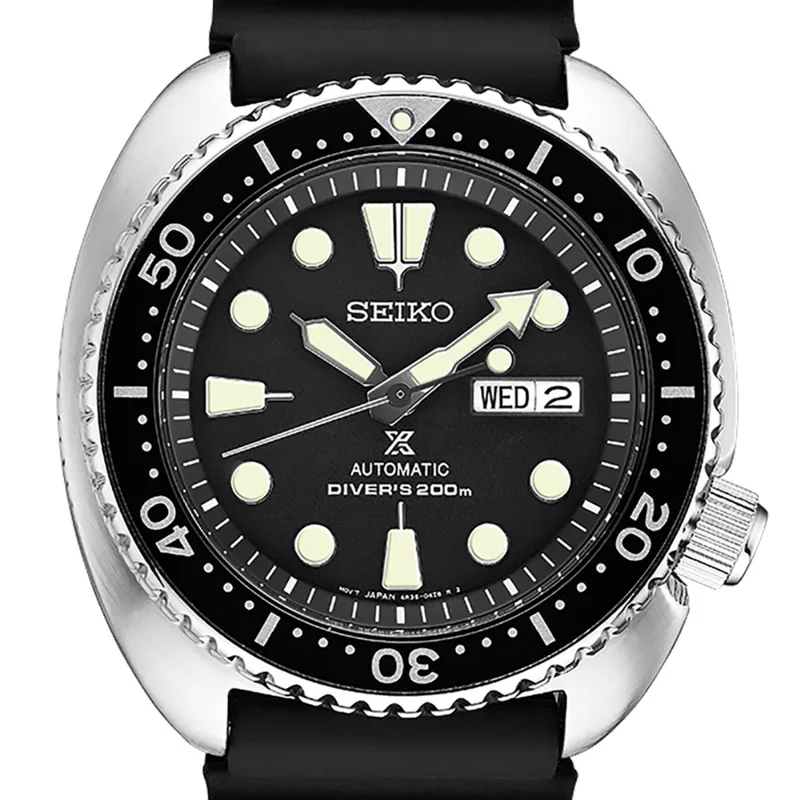
The Turtle's cushion-shaped case is one of the most beloved designs in dive watch history (originating from the 6309 in 1976). The CasiOak's octagonal bezel references the AP Royal Oak at 1/100th the price. Both are design icons in their respective worlds.
Movement & Performance
Fundamentally different technologies
The Turtle's 4R36 is an automatic mechanical movement (hacks, handwinds, day-date, 41hr reserve, ±15 sec/day). The CasiOak is quartz analog-digital (±15 sec/month, world time, stopwatch, countdown timer, LED light). Different tools for different jobs.
Wearability & Fit
CasiOak is smaller and lighter
The Turtle at 45mm × 13.4mm is a substantial dive watch. The CasiOak at 45.4mm × 11.8mm looks similar in diameter but wears lighter due to its resin case. The CasiOak is also more comfortable for all-day wear and physical activity.
Value & Cost of Ownership
CasiOak is a fraction of the price — essentially disposable pricing
At $100–$150 versus $500–$1,000, the CasiOak is a fraction of the price. It requires a battery every 2-3 years (~$10) vs the Turtle's mechanical service every 5-7 years (~$150-200). Over 5 years, the Turtle costs roughly 5x more to own.
Brand Heritage
Both are Japanese watchmaking legends
Seiko (est. 1881) pioneered the quartz revolution and makes everything from $50 to $50,000 watches. Casio (est. 1957) created the G-Shock concept in 1983 — watches that survive 10m drops. Both are authentic, category-defining brands.
Our Verdict
Seiko
Prospex "Turtle"
Choose the Seiko Turtle if you want a genuine mechanical dive watch with heritage. The 4R36 automatic movement, ISO 6425 rating, and the legendary "Turtle" case shape connect you to 50+ years of Seiko dive watch history.
Check Price on AmazonCasio
G-Shock GA-B2100 CasiOak
Choose the G-Shock CasiOak if you want a watch you literally never have to worry about. It survives drops, water, magnets, and impacts that would destroy any mechanical watch. At $100–$150, it's the best value in all of watchmaking.
Check Price on AmazonThe Bottom Line
The Seiko Prospex Turtle at $500–$1,000 is an affordable genuine ISO 6425 dive watch with an automatic movement, while the Casio G-Shock CasiOak at $100–$150 is the most durable and affordable tool watch ever produced — they serve fundamentally different philosophies of timekeeping.
Frequently Asked Questions
More Comparisons
Explore These Watches
How This Page Was Made
Our comparisons are generated from a hand-maintained specification database and reviewed under our editorial standards. We use AI tools to assemble pages from that data. We don’t invent specs: every number traces back to the database, and when we correct an entry, the fix is applied site-wide. As an Amazon Associate, The Horologist earns from qualifying purchases.