Rado Captain Cook High-Tech Ceramic vs Raymond Weil Freelancer Open Heart
Rado's diver meets Raymond Weil's timepiece
Quick Verdict
The Rado Captain Cook High-Tech Ceramic ($1,500–$2,500) and Raymond Weil Freelancer Open Heart ($1,500–$2,500) are closely matched timepieces at similar price points. The Captain Cook High-Tech Ceramic emphasizes Automatic (ETA C07.611 base) engineering while the Freelancer Open Heart focuses on Swiss Made craftsmanship.
Transparency — We earn a small commission on purchases made through our Amazon links. This doesn't affect our editorial independence.
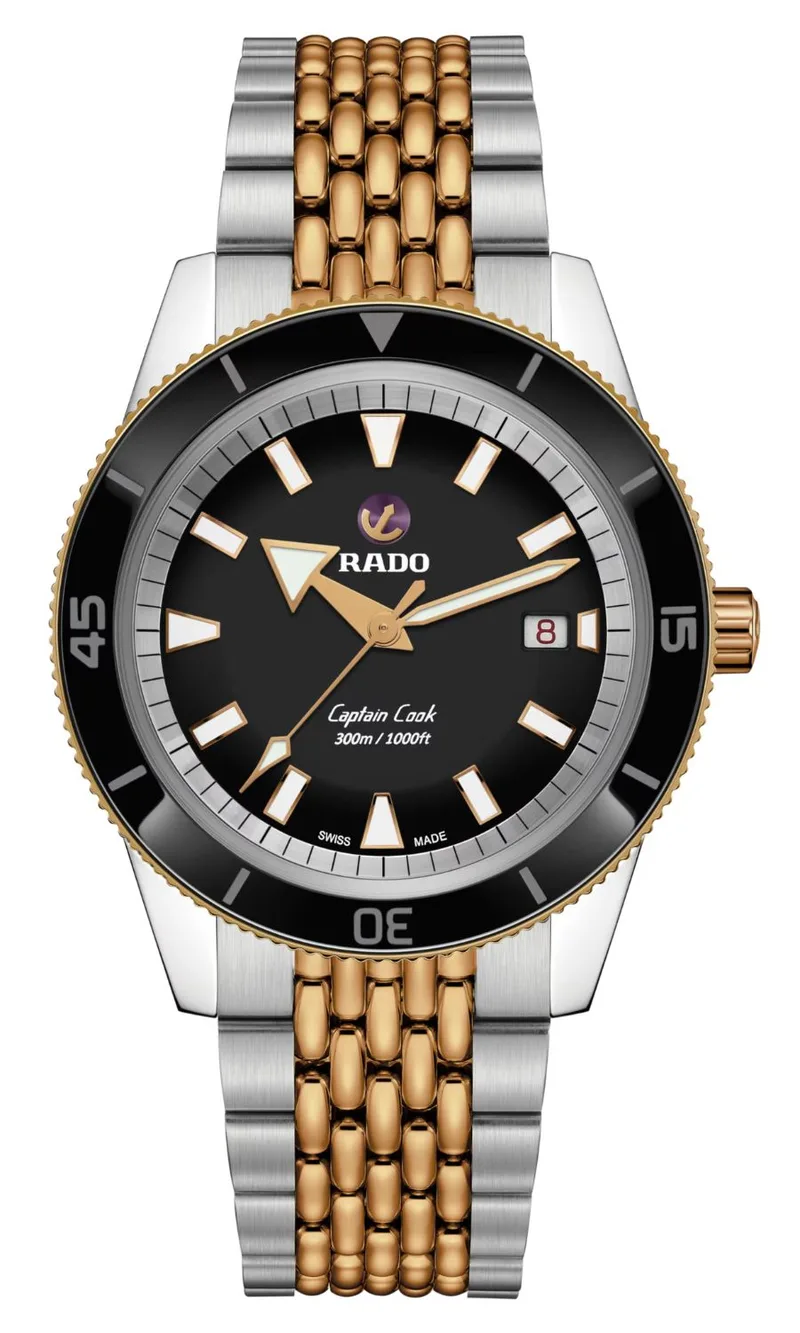
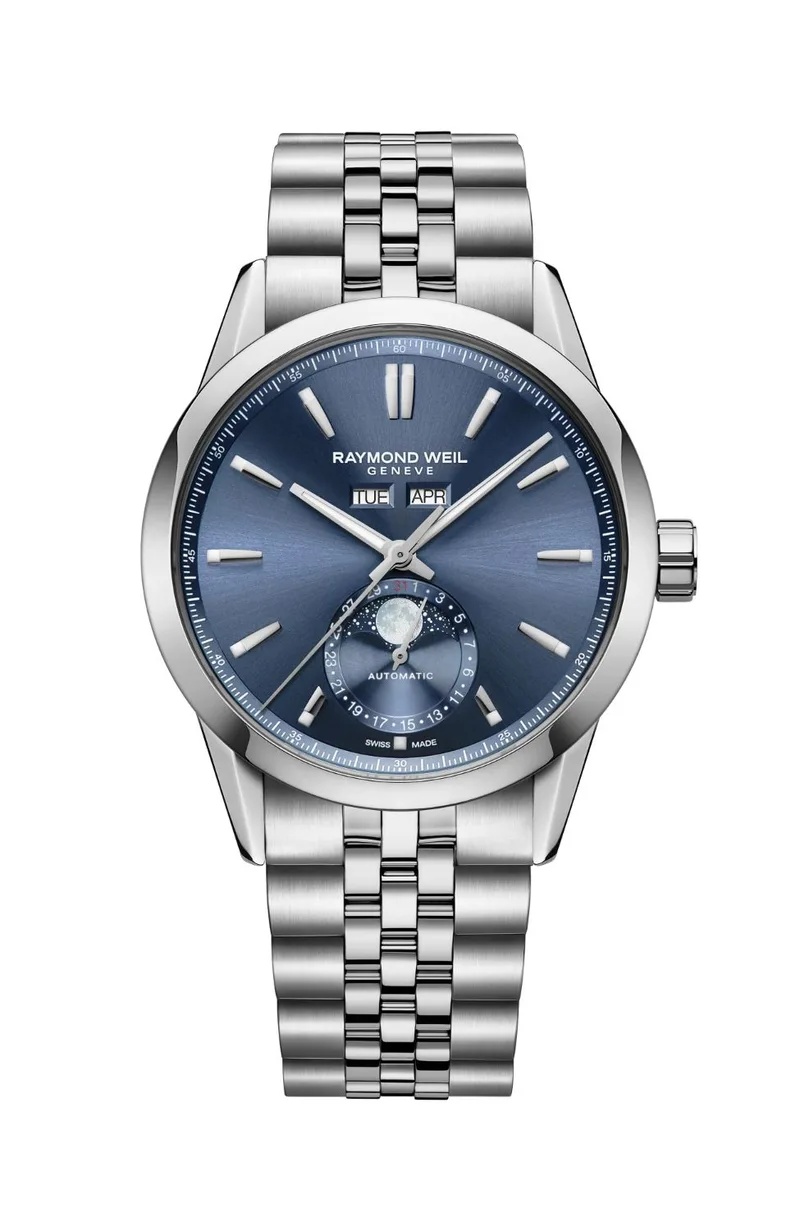
Specifications Compared
| Feature | Rado Captain Cook High-Tech Ceramic | Raymond Weil Freelancer Open Heart |
|---|---|---|
| Price | $1,500–$2,500 | $1,500–$2,500 |
| Case Size | 43mm | 42mm |
| Movement | Automatic Calibre R734 | Automatic Caliber RW4200 |
| Caliber Type | Automatic (ETA C07.611 base) | Automatic (Sellita SW200 base) |
| Power Reserve | 80 Hours | 38 Hours |
| Water Resistance | 300m (30 ATM) | 100m (10 ATM) |
| Crystal | Box-shaped Sapphire | Sapphire with Antiglare |
| Case Material | High-Tech Ceramic | Stainless Steel |
| Origin | Swiss Made | Swiss Made |
Category-by-Category Analysis
Design & Aesthetics
Rado's design language vs Raymond Weil's approach
The Rado Captain Cook High-Tech Ceramic features a High-Tech Ceramic case at 43mm with Box-shaped Sapphire protection. The Raymond Weil Freelancer Open Heart offers Stainless Steel construction at 42mm with Sapphire with Antiglare. Both represent their brand's distinct design philosophy and heritage.
Movement & Performance
Automatic Calibre R734 vs Automatic Caliber RW4200
The Captain Cook High-Tech Ceramic runs the Automatic Calibre R734 (Automatic (ETA C07.611 base), 80 Hours power reserve) at 21,600 vph (3 Hz) frequency. The Freelancer Open Heart uses the Automatic Caliber RW4200 (Automatic (Sellita SW200 base), 38 Hours reserve) at 28,800 vph (4 Hz). The Captain Cook High-Tech Ceramic edges ahead on power reserve.
Wearability & Fit
43mm vs 42mm — different wrist presence
At 43mm, the Captain Cook High-Tech Ceramic has a bolder wrist presence compared to the Freelancer Open Heart at 42mm. Water resistance differs: 300m (30 ATM) vs 100m (10 ATM).
Value & Cost of Ownership
Same tier — different value propositions
The Rado Captain Cook High-Tech Ceramic sits at $1,500–$2,500 and the Raymond Weil Freelancer Open Heart at $1,500–$2,500. On the specs that outlast any price: the Captain Cook High-Tech Ceramic uses Box-shaped Sapphire with 80 Hours, against Sapphire with Antiglare and 38 Hours on the Freelancer Open Heart. Service intervals are typically 5-7 years for both.
Water Resistance
300m (30 ATM) vs 100m (10 ATM)
The Captain Cook High-Tech Ceramic is rated to 300m (30 ATM) while the Freelancer Open Heart handles 100m (10 ATM). The Captain Cook High-Tech Ceramic is better suited for water activities.
Materials Face-Off
| Component | Rado Captain Cook High-Tech Ceramic | Raymond Weil Freelancer Open Heart |
|---|---|---|
| Case material | High-Tech Ceramic (Zirconium oxide / ZrO₂ based). Sintered at ~1,450°C. Mohs hardness ~8.5–9. Virtually scratchproof — only diamond and sapphire can | Medical-grade 316L stainless steel with alloy composition: Fe (~65%), Cr (16–18%), Ni (10–14%), Mo (2–3%), Mn (≤2%), C (≤0.03%). Mixed finishing — polished bezel, case flanks, and bracelet center links with satin-brushed outer surfaces. |
| Brittleness trade-off | While ceramic is extremely scratch-resistant, it is brittle — sharp impacts, drops on hard surfaces, or concentrated point loads can cause cracking o | Synthetic corundum crystal (Mohs hardness 9) with dual-sided anti-reflective coating — applied to both the front crystal and the exhibition caseback sapphire. This dual coating reduces glare for optimal viewing of both the dial-side open-heart aperture and the rear movement view. |
| Crystal | Box-shaped sapphire (Mohs 9) with anti-reflective coating — vintage-inspired domed profile. Mohs 9 | Stainless steel H-link bracelet with polished center links and brushed outer links. Butterfly deployant clasp with push-button release. |
| Bezel insert | Ceramic — matches the case material for visual and tactile consistency. | Standard Super-LumiNova applied to hour markers and hands. Green emission spectrum provides reliable low-light visibility. |
| Bracelet | Ceramic links (matching case) — articulated three-link design. Significantly lighter than steel bracelets. | Unlike standard open-heart designs that simply drill cutouts into solid dials, the RW1212 movement's gear train was completely relocated to position the balance wheel at 6 o'clock on the dial side, suspended symmetrically under a skeletonized single bridge. This is dedicated engineering, not cosmetic modification. |
Cost of Ownership Compared
The Raymond Weil Freelancer Open Heart saves you $473 over 5 years of ownership
Who Should Pick Which
Pick the Rado Captain Cook High-Tech Ceramic if…
- Dive watch enthusiasts — 300m water resistance is proper dive spec
- Weekend warriors — 80-hour power reserve means it survives two days off the wrist
- Those who prioritize scratch resistance — sapphire crystal
- Dive watch collectors who appreciate proper ISO-rated tool watches
- Heritage enthusiasts drawn to ** Rado's historical pedigree
Pick the Raymond Weil Freelancer Open Heart if…
- Enthusiasts who want a visible balance wheel / open-heart complication under $2,000
- Those who value independent, family-owned Swiss watchmaking over conglomerate brands
- Dress-sport watch seekers — the Freelancer bridges formal and casual effortlessly
- Buyers who appreciate genuine movement engineering (RW1212 is proprietary, not a cosmetic cutout)
- Music and arts enthusiasts drawn to Raymond Weil's cultural DNA
Rado Captain Cook High-Tech Ceramic
- Ceramic is brittle — drops/sharp impacts can crack the case. Full case replacement, not repair.
- 15.4mm thickness — chunky; won't slide under dress cuffs.
- Skeleton dial is polarizing — many prefer a traditional solid dial.
- ETA C07 base movement at this price — you're paying for the ceramic, not the movement.
Raymond Weil Freelancer Open Heart
- Brand recognition gap: Raymond Weil has limited recognition outside watch enthusiast circles. Most people won't recognize the brand — which matters if brand cachet drives your purchase decision.
- 38–41 hour power reserve: Below the 2026 standard of 60–80 hours. The dedicated two-hand design helps conserve power, but skip a day wearing it and you'll still need to reset.
- Open-heart polarization: Open-heart designs are divisive — enthusiasts either love the visible mechanism or consider it a gimmick. The RW1212's symmetrical single-bridge execution is among the most elegant implementations, but the opinion split persists.
- Grey-market erosion: Heavy discounts (35–40% off retail) suggest the MSRP is aspirational rather than market-clearing, which can undermine perceived value.
Our Verdict
Rado
Captain Cook High-Tech Ceramic
Choose the Rado Captain Cook High-Tech Ceramic if you prioritize Automatic (ETA C07.611 base) engineering, Swiss Made craftsmanship, and 300m (30 ATM) water resistance. At $1,500–$2,500, it delivers Automatic Calibre R734 with 80 Hours power reserve.
Check Price on AmazonRaymond Weil
Freelancer Open Heart
Choose the Raymond Weil Freelancer Open Heart if you value Automatic (Sellita SW200 base) technology, Swiss Made heritage, and 42mm proportions. At $1,500–$2,500, the Automatic Caliber RW4200 with 38 Hours power reserve makes it a compelling choice.
Check Price on AmazonThe Bottom Line
The Rado Captain Cook High-Tech Ceramic and Raymond Weil Freelancer Open Heart represent two distinct approaches to fine watchmaking — the Rado bringing Swiss Made tradition while Raymond Weil delivers Swiss Made engineering.
Frequently Asked Questions
More Comparisons
Tag Heuer Carrera Chronograph vs Rado Captain Cook High-Tech Ceramic
Tag Heuer's chronograph meets Rado's diver
Tag Heuer Carrera Chronograph vs Raymond Weil Freelancer Open Heart
Tag Heuer's chronograph meets Raymond Weil's timepiece
Tissot PRX Powermatic 80 vs Rado Captain Cook High-Tech Ceramic
Tissot's timepiece meets Rado's diver
Explore These Watches
How This Page Was Made
Our comparisons are generated from a hand-maintained specification database and reviewed under our editorial standards. We use AI tools to assemble pages from that data. We don’t invent specs: every number traces back to the database, and when we correct an entry, the fix is applied site-wide. As an Amazon Associate, The Horologist earns from qualifying purchases.