Updated
Longines HydroConquest vs Tissot Seastar 1000
Two Swiss 300m divers, two price bands apart
Quick Verdict
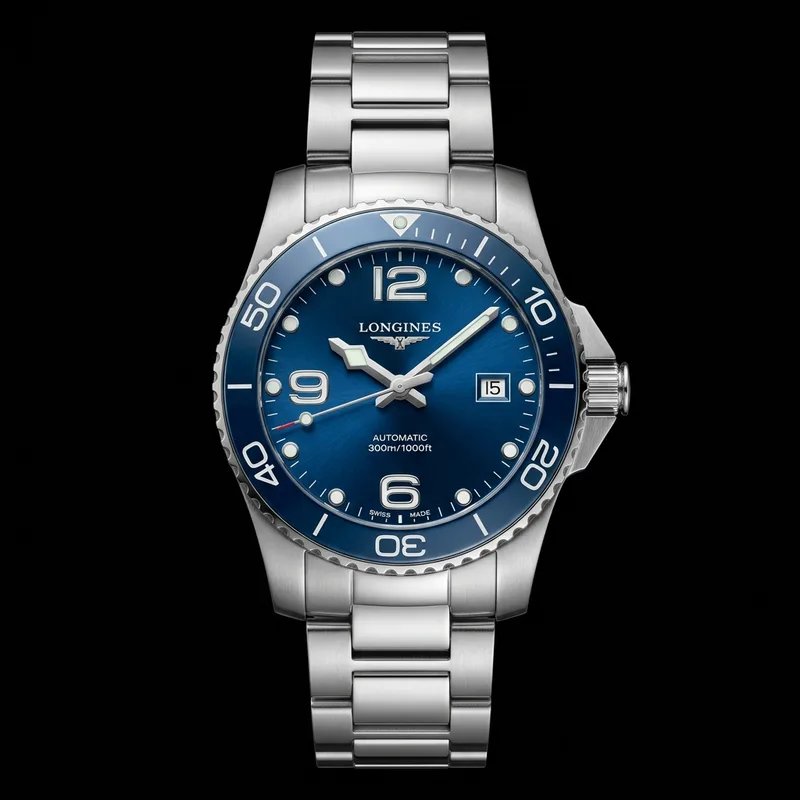
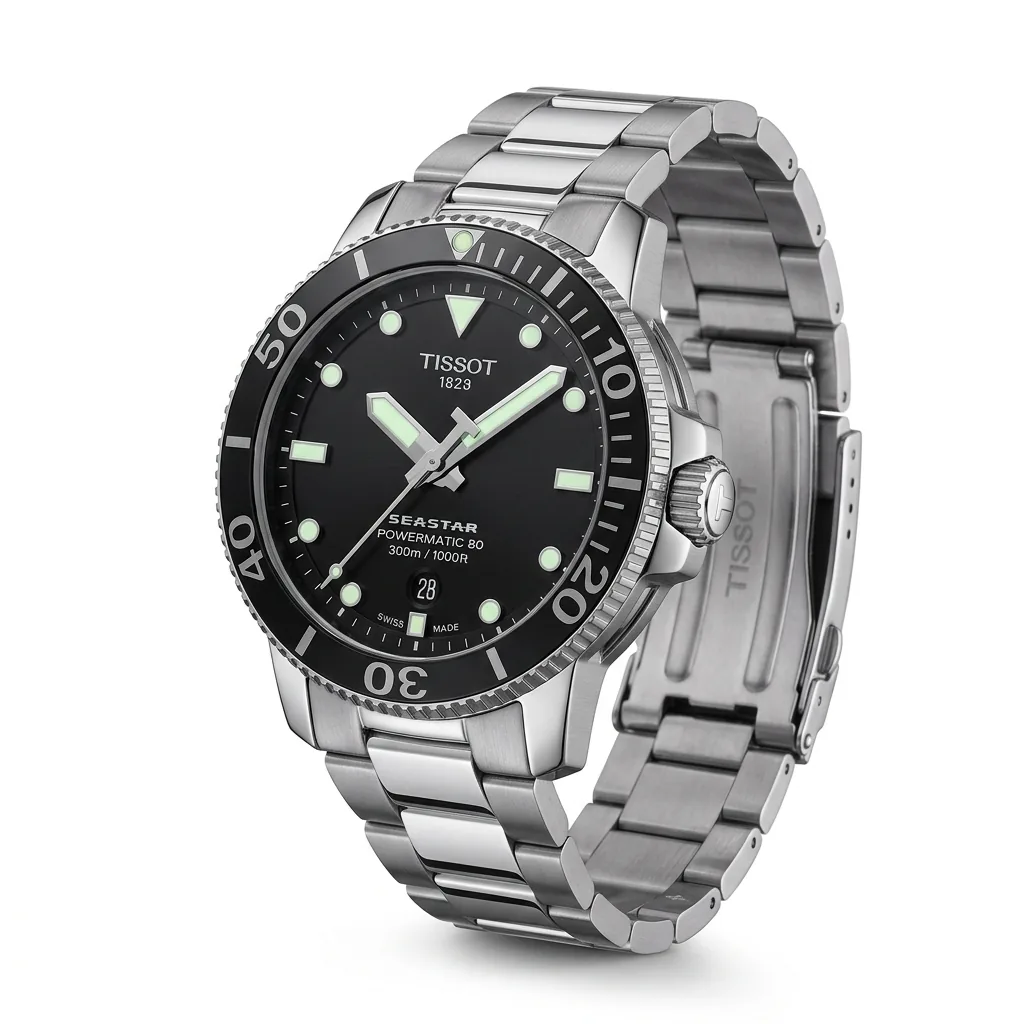
The Longines HydroConquest ($1,500–$2,500) and the Tissot Seastar 1000 Powermatic 80 ($500–$1,000) are both Swiss automatic divers rated to 300m with sapphire crystals. The HydroConquest is 41mm with the L888.5, a silicon balance spring and a 72-hour reserve. The Seastar is 40mm with the Powermatic 80 and an 80-hour reserve. On paper they are close; the Seastar costs much less.
Transparency — We earn a small commission on purchases made through our Amazon links. This doesn't affect our editorial independence.
Specifications Compared
| Feature | Longines HydroConquest Automatic | Tissot Seastar 1000 Automatic |
|---|---|---|
| Price | $1,500–$2,500 | $500–$1,000 |
| Case Size | 41mm | 40mm |
| Movement | Automatic L888.5 | Automatic Powermatic 80 (Caliber 80.111) |
| Caliber Type | ETA-Based Automatic with Silicon Balance Spring | ETA/Tissot Automatic |
| Power Reserve | 72 Hours | 80 Hours |
| Water Resistance | 300m (30 ATM) | 300m (30 ATM) |
| Crystal | Sapphire with Anti-Reflective Coating | Sapphire Crystal |
| Case Material | Stainless Steel | Stainless Steel |
| Origin | Swiss Made | Swiss Made |
Category-by-Category Analysis
Design & Aesthetics
Two modern Swiss divers
Both are modern Swiss divers. The HydroConquest has a unidirectional ceramic bezel; the Seastar's description also notes a ceramic bezel. The Longines leans more polished and premium.
Movement & Performance
L888.5 against Powermatic 80
The Longines runs the L888.5, 21 jewels at 25,200 vph, 72-hour reserve, with a silicon balance spring. The Tissot runs the Powermatic 80 (calibre 80.111), 23 jewels at 21,600 vph, 80-hour reserve. The Tissot runs longer; the Longines has the higher beat and the silicon spring.
Durability & Water Resistance
Both 300m with sapphire
Both are rated to 300m (30 ATM) and both have sapphire crystals; the Longines adds an anti-reflective coating.
Wearability & Fit
Within a millimetre
The HydroConquest is 41mm and the Seastar 40mm. Both are mainstream diver sizes.
Value & Cost of Ownership
The Seastar is two bands cheaper
The Seastar sits in the $500–$1,000 band and the HydroConquest in $1,500–$2,500. With matching water ratings and a longer reserve, the Seastar is the value pick.
Our Verdict
Longines
HydroConquest Automatic
Choose the Longines HydroConquest if you want the more upmarket brand, a ceramic bezel and a silicon balance spring. It is the more refined finish of the two.
Check Price on AmazonTissot
Seastar 1000 Automatic
Choose the Tissot Seastar 1000 if you want the same 300m Swiss specification for much less. Its 80-hour reserve is actually the longer.
View the dossierThe Bottom Line
The Longines HydroConquest and the Tissot Seastar 1000 Powermatic 80 are both Swiss automatic dive watches rated to 300m with sapphire crystals; the HydroConquest has a 72-hour reserve and a silicon balance spring, while the Seastar has an 80-hour reserve and sits two price bands lower.
Frequently Asked Questions
More Comparisons
Explore These Watches
How This Page Was Made
Our comparisons are generated from a hand-maintained specification database and reviewed under our editorial standards. We use AI tools to assemble pages from that data. We don’t invent specs: every number traces back to the database, and when we correct an entry, the fix is applied site-wide. As an Amazon Associate, The Horologist earns from qualifying purchases.