Updated
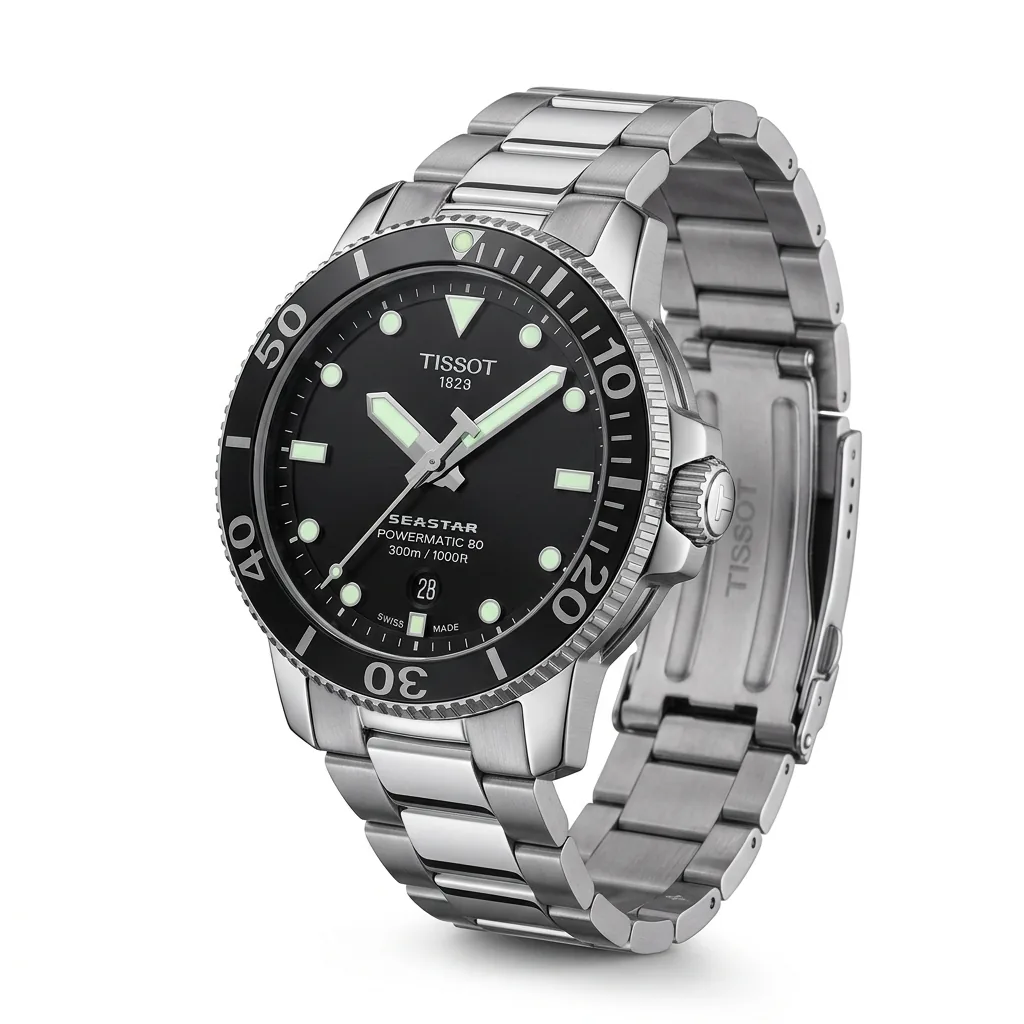
Casio Duro vs Tissot Seastar 1000
The budget diver against the entry Swiss diver
Quick Verdict
The Casio Duro MDV106 ($50–$100) is a 44mm quartz diver rated to 200m with mineral glass. The Tissot Seastar 1000 Powermatic 80 ($500–$1,000) is a 40mm Swiss automatic rated to 300m with a sapphire crystal and an 80-hour power reserve. The Duro is the bargain; the Seastar is the step up in every specification.
Transparency — We earn a small commission on purchases made through our Amazon links. This doesn't affect our editorial independence.

Specifications Compared
| Feature | Casio Duro MDV-106B Blue | Tissot Seastar 1000 Automatic |
|---|---|---|
| Price | $50–$100 | $500–$1,000 |
| Case Size | 44mm | 40mm |
| Movement | Quartz Module 2784 | Automatic Powermatic 80 (Caliber 80.111) |
| Caliber Type | Casio Quartz (Battery) | ETA/Tissot Automatic |
| Power Reserve | 3-Year Battery | 80 Hours |
| Water Resistance | 200m (20 ATM) Diver | 300m (30 ATM) |
| Crystal | Mineral Glass | Sapphire Crystal |
| Case Material | Stainless Steel | Stainless Steel |
| Origin | Casio (Japan) | Swiss Made |
Category-by-Category Analysis
Design & Aesthetics
Both are classic divers
Both follow the classic dive-watch layout of a rotating bezel, bold markers and a date. The Seastar is the more finished piece; the Duro is the more utilitarian one. On the wrist, the Seastar's 40mm case reads as more refined than the Duro's 44mm.
Movement & Performance
Quartz against an 80-hour Swiss automatic
The Duro runs Casio quartz Module 2784 with a battery rated at about three years. The Seastar runs the Swiss Powermatic 80 (calibre 80.111), a 23-jewel automatic at 21,600 vph with an 80-hour reserve, so it keeps running over a weekend off the wrist. The Duro will keep tighter time; the Seastar needs no battery.
Durability & Water Resistance
Sapphire and 300m against mineral and 200m
The Seastar is rated to 300m (30 ATM) and uses a sapphire crystal. The Duro is rated to 200m (20 ATM) and uses mineral glass, which scratches more easily. Both ratings are far beyond what most owners will ever need, but the crystal difference shows up in daily wear.
Wearability & Fit
The Seastar is 4mm smaller
The Seastar is 40mm and the Duro is 44mm. If your wrist is under about 7 inches, the Seastar will sit more comfortably and look better proportioned.
Value & Cost of Ownership
The Duro costs a fraction as much
The Duro sits in the $50–$100 band and the Seastar in $500–$1,000. The Seastar justifies its price with sapphire, 300m, a Swiss automatic and a smaller case. The Duro's argument is simple: it does the core job of a dive watch for very little money.
Our Verdict
Casio
Duro MDV-106B Blue
Choose the Casio Duro if you want a capable dive watch for very little money. It has 200m, a screw-down crown and caseback, and a unidirectional bezel. It is the watch you can wear on a boat without worrying about it.
Check Price on AmazonTissot
Seastar 1000 Automatic
Choose the Tissot Seastar if you want a Swiss automatic diver that you will keep for years. It adds a sapphire crystal, a 300m rating and the Powermatic 80 movement with an 80-hour reserve, in a smaller 40mm case that suits more wrists.
View the dossierThe Bottom Line
The Tissot Seastar 1000 Powermatic 80 is a 40mm Swiss automatic dive watch with a sapphire crystal, 300m water resistance and an 80-hour power reserve, while the Casio Duro MDV106 is a 44mm quartz dive watch with mineral glass and 200m water resistance at a fraction of the price.
Frequently Asked Questions
More Comparisons
Explore These Watches
How This Page Was Made
Our comparisons are generated from a hand-maintained specification database and reviewed under our editorial standards. We use AI tools to assemble pages from that data. We don’t invent specs: every number traces back to the database, and when we correct an entry, the fix is applied site-wide. As an Amazon Associate, The Horologist earns from qualifying purchases.